Aluminum Alloy FSW Welding Guide: 6 Common Problems
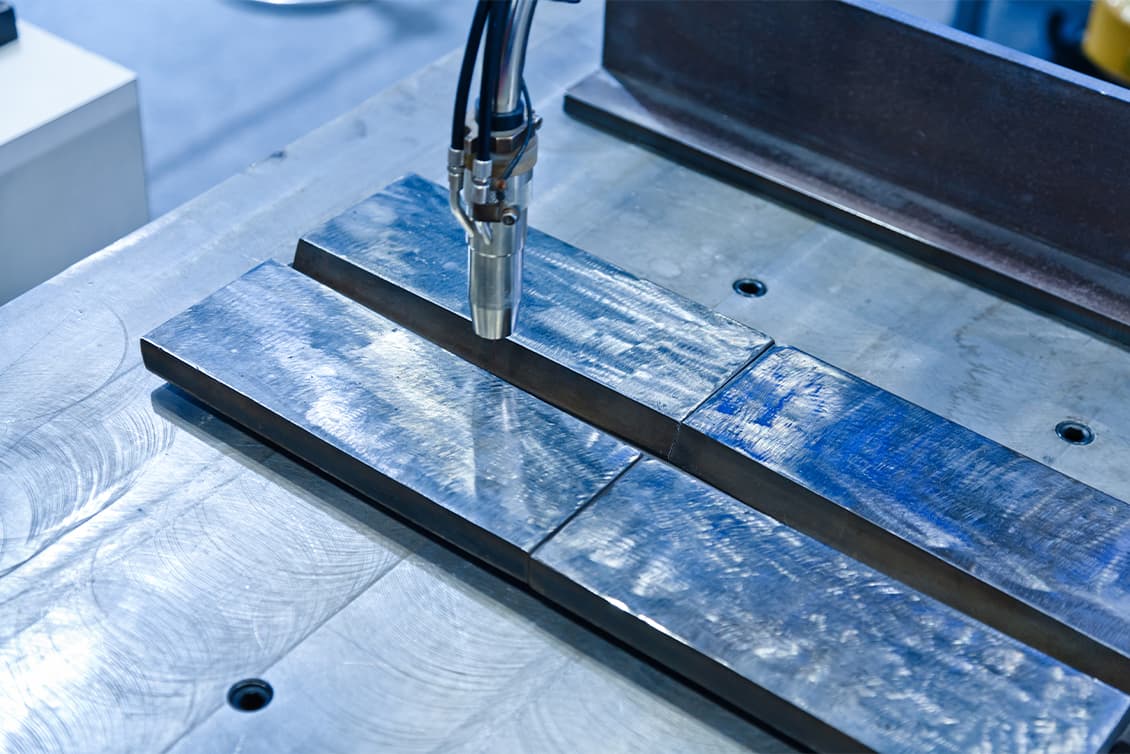
With the global push toward lightweighting, aluminum alloy FSW (Friction Stir Welding) technology has become a core process in automotive manufacturing, electric vehicle component fabrication, and the aerospace sector. FSW utilizes a solid-state joining method, where frictional heat generated by a rapidly rotating tool softens the aluminum material to a plastic state rather than melting it. This avoids typical defects seen in traditional fusion welding, such as cracks, porosity, and excessive heat-affected zones. This revolutionary technique is particularly well-suited for manufacturing lightweight components with thin walls and complex geometries. This article outlines six common issues in aluminum alloy FSW welding. If you encounter any of these, Tung Shuhn Precision is ready to provide expert solutions to help you optimize manufacturing efficiency across your global supply chain.
-
Low production efficiency due to slow welding speed
One of the most common challenges in aluminum FSW is mismatched process parameters. An improper balance between the tool rotation speed and travel speed can result in insufficient or excessive heat input, significantly reducing welding speed. In high-volume applications such as EV battery housings and automotive chassis brackets, this directly impacts production capacity and delivery schedules.
-
Defects at the joint area, such as tunnel holes or voids
Due to aluminum's excellent thermal conductivity, uneven temperature distribution during FSW can cause imbalanced material flow, resulting in tunnel defects or micro-voids. These internal flaws can reduce joint strength by 60–80% and may lead to fatigue fractures under dynamic loads, posing serious safety risks in aerospace and automotive applications.
-
Excessive residual stress after welding, causing deformation
Although FSW is a solid-state process, the thermal cycles involved can still introduce significant residual stresses in aluminum, especially in thin-walled structures like bicycle frames and UAV bodies. Improper stress distribution can lead to part distortion, severely affecting assembly accuracy and final product quality.
-
Uneven surface roughness affecting post-processing
Common issues such as flash and oxide layers after FSW can cause surface roughness (Ra) values to exceed 6–8 μm, well above industrial standards. This not only affects appearance but can also reduce paint adhesion and corrosion resistance—critical factors in aerospace and medical device applications.
-
Material compatibility leading to insufficient weld strength
Different series of aluminum alloys (2xxx, 6xxx, 7xxx) vary in chemical composition and heat treatment states. During FSW, this can lead to elemental segregation and inconsistent microstructures, resulting in weld tensile strength reaching only 65–75% of the base material—insufficient for high-strength applications.
-
Equipment maintenance and tool life management
FSW tools operating under high temperature and pressure conditions in aluminum processing are prone to wear, especially in the shoulder and pin regions. Deterioration in geometric accuracy leads to welding instability and quality fluctuations, causing significant losses in 24/7 automotive OEM production environments.