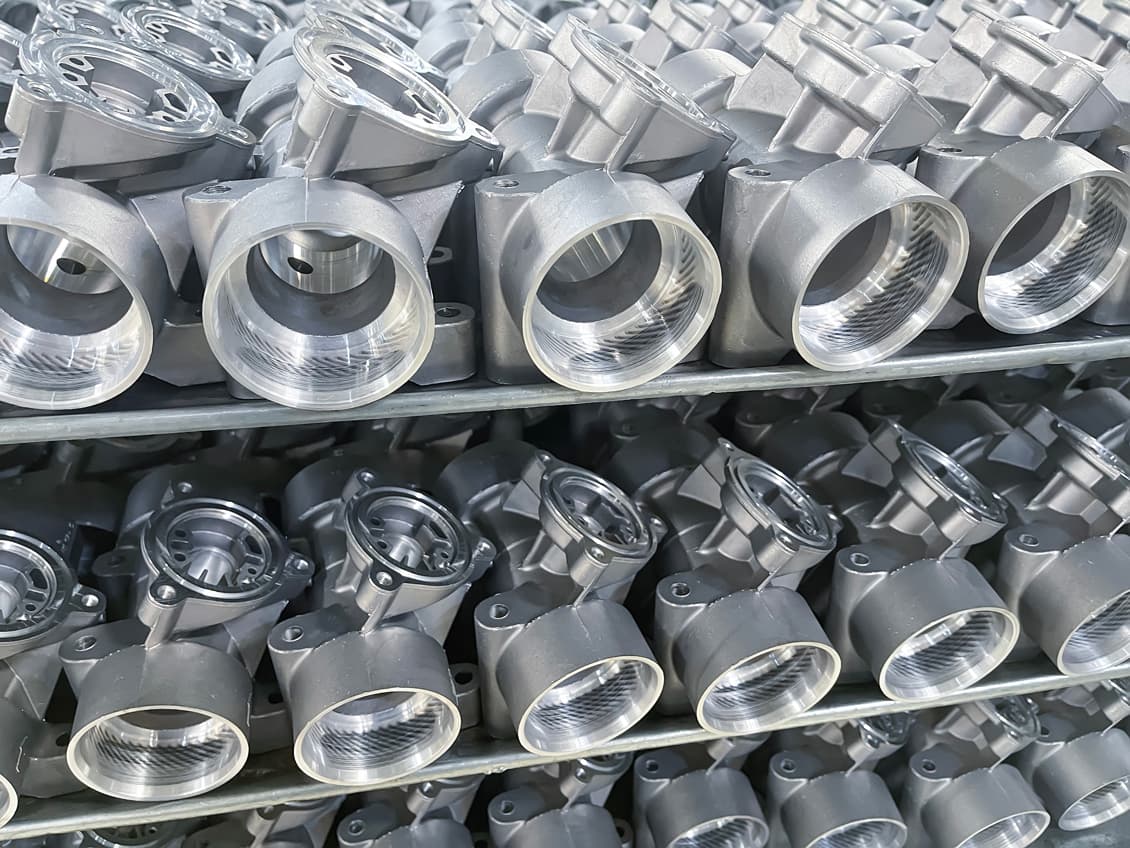
How Are High-strength Aluminum Alloy Parts Processed? What Capabilities Should A Precision Manufacturing Supplier Possess?
High-strength aluminum alloy parts are commonly used in automotive components, electric vehicle parts, bicycle components, water-cooling heat dissipation modules, aerospace components, and various industrial equipment. These parts share several common characteristics: they must be lightweight while maintaining sufficient structural strength, and they must also withstand long-term use, vibration, temperature variations, and external loads. Therefore, aluminum alloy machining is not simply about cutting material into shape. Material selection, machining methods, heat treatment, surface treatment, and quality control must all be considered together in order to produce parts that are truly suitable for mass production and reliable delivery.
Why Are Aluminum Alloy Parts Difficult to Manufacture?
Many people assume that aluminum alloy is easy to machine, but high-strength aluminum alloy parts actually require considerable experience from the machining supplier. Although aluminum alloy is lightweight and offers good thermal conductivity, problems such as deformation, surface scratches, dimensional deviation, and tool wear can easily occur during machining. This is especially true when parts have thin structures, uneven wall thicknesses, numerous holes, or tight tolerance requirements. If any machining condition is not properly controlled, it may affect subsequent assembly and product performance.
From a procurement perspective, the real concern is not simply whether a part can be manufactured, but whether it can be produced consistently, with stable quality from batch to batch and without quality changes after mass production begins. This is often where the greatest differences emerge among suppliers of high-strength aluminum alloy parts.
Key Considerations in Machining High-Strength Aluminum Alloy Parts
Select the Right Material
Different aluminum alloy grades vary in strength, ductility, machinability, and corrosion resistance. If a part is used in automotive structural components or other high-load applications, material selection should not be based on price alone. Actual loading conditions, environmental requirements, and subsequent surface treatments must also be considered. A good machining supplier will help customers evaluate material suitability during the early stages of development to avoid repeated modifications later.
Stable CNC Precision Machining
For high-strength aluminum alloy parts, CNC machining is one of the most common and critical manufacturing processes. The machining supplier must be able to control tool paths, cutting speeds, fixture design, and deformation compensation in order to maintain stable dimensions, tolerances, and surface quality. For thin-walled or complex structures, an experienced engineering team is even more important for planning staged machining and optimizing the manufacturing process.
Balance Structural Strength and Weight
The greatest value of aluminum alloy parts lies in their ability to reduce weight while maintaining rigidity. This means that rib configuration, wall thickness distribution, stress concentration areas, and machining feasibility must all be considered during the design stage. If the design focuses only on appearance while ignoring machining requirements and load conditions, the result can easily be low yield rates, excessive deformation, or insufficient service life.
Do Not Overlook Heat Treatment and Surface Treatment
High-strength aluminum alloy parts are often heat-treated to improve their mechanical properties and may also require anodizing, coating, or corrosion-resistant treatment afterward. These processes are not merely cosmetic. They can also affect dimensions, durability, and actual performance. Therefore, a supplier capable of integrating both upstream and downstream processes can significantly reduce communication costs for customers.
What Capabilities Should a Precision Manufacturing Supplier Have?
If you are looking for an aluminum alloy machining supplier in Taiwan, a supplier of high-strength aluminum alloy parts, or a CNC parts manufacturer for long-term cooperation, the following capabilities are especially important.
01Process Integration Capability
A good supplier should not be limited to a single machining process. It should be able to integrate prototyping, CNC machining, surface treatment, inspection, and mass production planning. This helps shorten development time and makes it easier to respond to sudden customer design changes.
02Quality Control Capability
For automotive and industrial parts, consistent quality is more important than producing a single attractive sample. Factories with complete inspection procedures, measuring equipment, batch management, and traceability systems are generally better suited for long-term cooperation. If a supplier has an IATF 16949 quality management system, it is an additional advantage for automotive customers.
03Engineering Support Capability
Many parts cannot be mass-produced based solely on drawings. Experience is also required to determine tooling, fixtures, machining sequences, and tolerance allocation. Suppliers that can provide DFM recommendations are generally better able to help customers reduce risks and minimize trial-and-error during development.
04Mass Production Stability
Prototyping is relatively easy; mass production is the real test. A machining supplier worth working with must be able to maintain dimensional consistency, stable lead times, and yield performance even as production volumes increase. For B2B customers, this directly affects shipment schedules and customer satisfaction.
Key Questions to Ask When Choosing a Supplier
If you are looking for a high-strength aluminum alloy machining supplier, it is recommended to ask the following questions directly:
- Do you provide material certificates for every batch?
- Do you have dedicated cutting parameters for high-strength aluminum alloys?
- Do you perform hardness or mechanical property sampling inspections after machining?
- Do you have stress-relief treatment and deformation compensation capabilities?
- Do you have five-axis machining equipment for complex structures?
If the supplier cannot answer these questions clearly or responds vaguely, this should be considered a warning sign.
Why Choose Tung Shuhn Precision? A Metal Manufacturing Specialist Based in Changhua, Taiwan
Tung Shuhn Precision has long specialized in precision metal parts manufacturing and offers comprehensive capabilities in precision aluminum alloy machining, CNC machining, forging, casting, and FSW friction stir welding. Its services cover applications in electric vehicles, water cooling, bicycles, automobiles and motorcycles, industrial equipment, and aerospace. For customers requiring high-strength aluminum alloy parts, Tung Shuhn is not simply a machining supplier, but a manufacturing partner capable of evaluating process risks together with customers from the early stages of product development.
If you are looking for a high-strength aluminum alloy parts manufacturer in Taiwan, precision aluminum CNC machining services, or a manufacturing supplier capable of supporting both prototyping and mass production, please feel free to contact Tung Shuhn Precision. We can evaluate the most suitable manufacturing process based on your drawings, materials, and application requirements, helping your products move into mass production more efficiently.