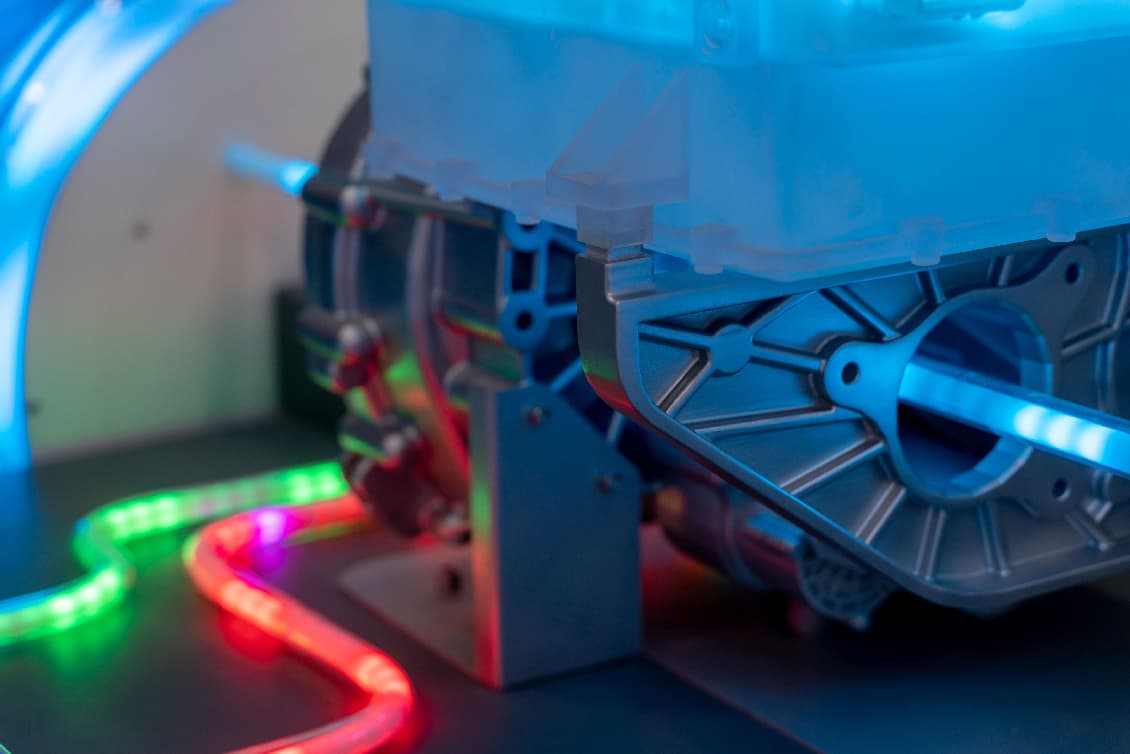
What Are the Key Factors of Liquid Cooling Modules? A Complete Guide to Precision Manufacturing in High-Performance Liquid Cooling Systems
In recent years, whether in AI servers, data centers, or the electric vehicle (EV) industry, “thermal management” has become one of the most challenging issues for R&D engineers. As chip computing power continues to increase and battery charge/discharge wattage rises, traditional air cooling with fans is no longer sufficient. As a result, many are turning to liquid cooling solutions.
If you have ever been involved in the procurement or development of liquid cooling systems, you may have experienced this: the prototype looks fine, and the flow channel design has passed CFD simulation verification, yet unexpected leakage issues arise once it enters production. By the time the problem is discovered, a large batch of products may already be scrapped, and customers are left dissatisfied. This is not an isolated case. Liquid cooling modules are among the most failure-prone products in precision manufacturing—not because of design flaws, but due to how well manufacturing processes control the details.
Therefore, a liquid cooling system capable of supporting high-value equipment reliably is far more complex than simply bending a few copper tubes and filling them with coolant. High-quality cold plates and cooling modules rely on extremely demanding precision manufacturing technologies. So, what are the key factors behind their production? Let's take a closer look.
1. Micron-Level Challenges in Internal Flow Channels: CNC Precision
The core of a cold plate lies in its internal flow channel design. To maximize heat dissipation within limited space, these channels are often designed with extremely fine fins or complex microchannel structures.
This presents a major challenge for CNC machining. If the channel walls are too thick, heat transfer efficiency decreases; if they are too thin, machining vibrations may cause deformation or scrap. Typically, tolerances for such precision cold plates are controlled within ±0.02 mm. High-quality manufacturers must precisely control tool paths and ensure that each channel achieves near mirror-like surface roughness, minimizing coolant flow resistance and achieving optimal heat exchange performance.
2. Eliminating the “Leakage” Nightmare: FSW (Friction Stir Welding)
For any electronic system, leakage is the greatest concern in liquid cooling. Traditional aluminum joining methods, such as TIG welding or conventional welding, can generate thermal stress deformation at high temperatures and may leave microscopic porosity—potential sources of future leaks.
This is why leading manufacturers such as Tesla specify the use of FSW (Friction Stir Welding). FSW is a solid-state welding process in which the metal does not melt but is joined through heat generated by high-speed friction and plastic deformation. The resulting joints offer exceptional strength with minimal thermal distortion, ensuring that cold plates maintain complete airtightness and liquid-tight integrity even under long-term high-pressure operation.
3. Material Selection and Surface Treatment: The Foundation of Long-Term Reliability
As coolant circulates through flow channels over long periods, improper material selection or inadequate surface treatment can lead to electrochemical corrosion. This may cause oxidation buildup that blocks channels or even penetrates walls, resulting in leakage.
High-end cold plates typically use corrosion-resistant 6xxx or 7xxx series aluminum alloys. After machining, they undergo high-quality anodizing or electroless nickel plating. These processes are not only for appearance but also form a durable protective layer, ensuring that the cooling system remains clean and reliable even after tens of thousands of operating hours.
4. Automotive-Grade Quality Control: IATF 16949 Standards
When liquid cooling modules are applied in electric vehicles or aerospace applications, their safety requirements must reach a near-zero failure level. This involves not only machining equipment but also rigorous process management. From raw material certification and SPC (Statistical Process Control) during manufacturing, to pressure testing and helium leak detection before shipment, every step must comply with the automotive industry's IATF 16949 standards.
Finding a Local Liquid Cooling Manufacturing Partner in Taiwan: TUNG SHUHN Precision
If you are developing next-generation cooling solutions and seeking a manufacturing partner who can provide professional input from the prototyping stage through to mass production, TUNG SHUHN Precision Industrial is an ideal choice rooted in Taiwan.
TUNG SHUHN has extensive experience in FSW (Friction Stir Welding) and advanced CNC machining. We have long served industries including electric vehicles (Tesla and Gogoro supply chains), data center cooling, and aerospace. Beyond machining, we also provide DFM (Design for Manufacturability) optimization recommendations to help improve thermal performance while reducing manufacturing costs and yield risks.
Liquid cooling technology will be a key competitive factor in the coming decade.
Although liquid cooling modules may seem like a niche product, their applications—ranging from data centers and electric vehicles to high-performance consumer electronics—are among the fastest-growing industries today. Those who can consistently manufacture leak-free, high-efficiency cooling modules will secure a critical position in the future supply chain. For any precision metal machining or liquid cooling module manufacturing needs, feel free to contact TUNG SHUHN Precision. Our engineering team is ready to work with you to develop more efficient and reliable thermal solutions.